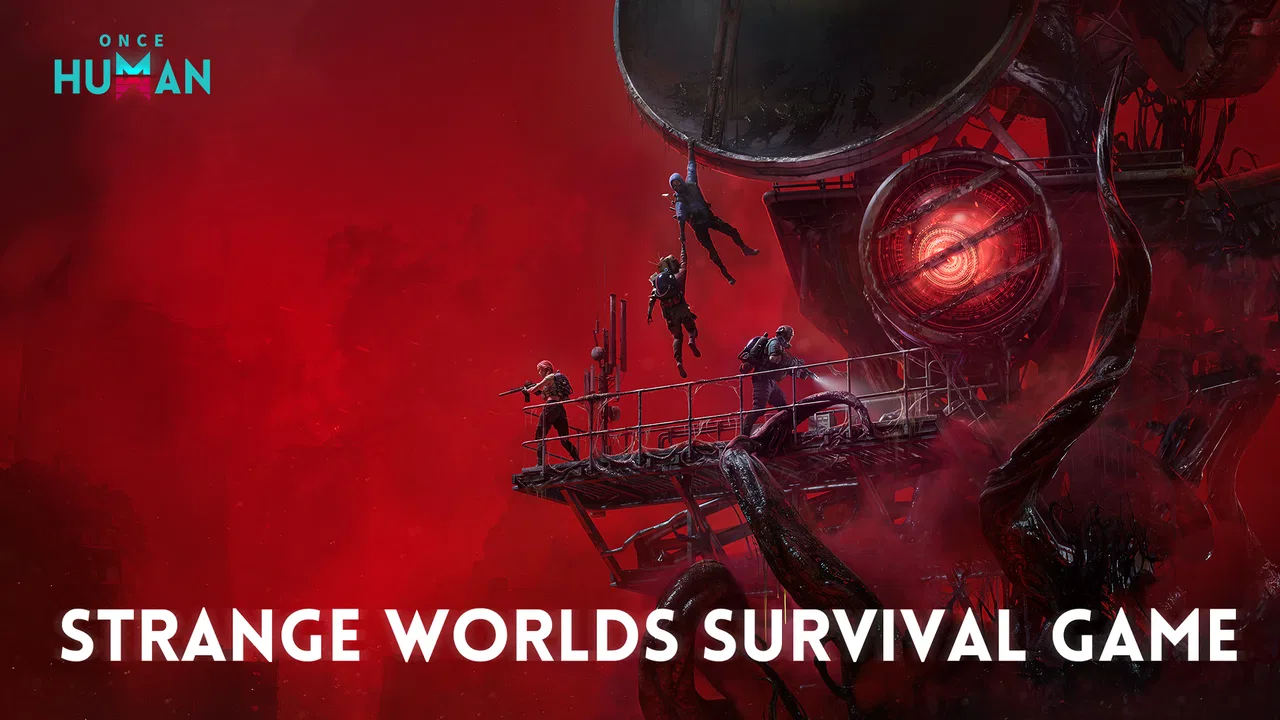
Once Human
- 4.5
- Rating
- 5.00M
- Installs
- Free
- Price

 Analysis by App-foxy
My first few hours with Once Human were less about chasing a checklist and more about learning how its world wants me to move through it. This is a free adventure game from Exptional Global, built around a post-apocalyptic multiplayer open world and survival. That description is accurate, but it does not quite capture the unusual mood: the game keeps placing ordinary-looking spaces beside unsettling discoveries, so even a simple trip can feel like a small expedition.
I approached it expecting the familiar survival routine of collecting materials, making equipment, building a base, and dealing with danger. Those elements are present, yet the game’s identity comes from the way it frames them. A road, abandoned building, strange landscape, or quiet stretch of wilderness can feel more important than the reward waiting at the end. I often found myself slowing down because the setting suggested that something was worth inspecting, even when I had originally planned to pass through.
The game is available at no purchase price, although optional in-app purchases range from $0.99 to $99.99 per item. It carries a Teen content rating, so it is aimed at older players rather than very young children. Its current version is 1.0.24, and it can run on Android devices using version 5.0 or later. In practical terms, the bigger question is not simply whether a phone can install it, but whether that phone can deliver a comfortable experience during long sessions in a large, active world.
You May Also Like

 Blood Strike: 2.5 Anniversary
Blood Strike’s Loadouts Turn Every Drop Into a Tactical Gamble
A close look at Blood Strike’s custom loadouts: how fast access to signature weapons reshapes its battle royale rhythm, rewards preparation, and narrows the gap between fights.

 Pandora - Music & Podcasts
Pandora’s Music Is Easy to Start, but Harder to Recover
Pandora’s strength is its low-effort path from a seed to a station. Its weak spot is how much confidence it asks you to place in connection, setup, and quiet recovery.

 8 Ball Pool
 Is Built on Rivalries, Rematches, and Routine
A close look at the rivalries, rematches, shared routines, and unanswered safety questions that turn a quick pool match into a persistent mobile community.

 Samsung Music
’s Quiet Strength Is Playing What You Already Own
Its reach comes less from spectacle than from dependable access to a personal library. That simplicity is both the app’s strongest retention engine and its ceiling.

 AccuWeather: Weather Radar
AccuWeather Review: A Quick, Clear Forecast for Everyday Decisions
For everyday plans, the best forecast is the one you can understand quickly. AccuWeather makes rain timing, radar, and local conditions easy to act on, with a few trade-offs.

 Hill Climb Racing
Why Hill Climb Racing Still Turns Crashes Into One More Run
A tiny car, a bumpy hill and one more upgrade: Hill Climb Racing keeps resurfacing because its simple chaos makes every near-miss feel personal.
More From Our News Desk



How the ruined world establishes its mood
I read this section as a closer look at how the ruined landscape shapes my expectations before anything dangerous happens. The useful habit is to treat visual changes as a reason to pause and reassess, rather than assuming every route is just a shortcut to the next objective. That attention to place leads naturally into the role sound and pacing play in sustaining unease.
A setting that makes routine travel feel meaningful
The strongest part of the presentation is its contrast. The world is damaged, but it is not visually empty. Familiar structures and recognizable human traces give the environment a grounded starting point, while the stranger elements gradually push it toward something more disturbing. That combination helps the game avoid feeling like a collection of disconnected survival zones. I usually understood what kind of place I was in before I understood what I was supposed to do there, and that is a valuable quality in an open-world game.
The art direction also supports exploration without relying entirely on large dramatic moments. Color, shape, and environmental clutter work together to make locations readable. A settlement does not feel the same as a wilderness route, and a suspicious area tends to announce itself through composition rather than a loud instruction. This makes wandering useful. I could follow a task, but I could also let the landscape pull me away from it without feeling that I had abandoned the game’s main purpose.
That freedom has a trade-off. Players who prefer a tightly directed adventure may see the open structure as a distraction. The game often asks me to manage several kinds of attention at once: where I am going, what resources I have, what danger may be nearby, and whether a side path is worth the time. I enjoy that mental pressure, but it can make short play sessions feel less tidy than a traditional level-based action game.
The visual language is more useful than decoration
One detail I appreciated is that the environment often communicates before the interface does. A location’s condition, isolation, and visual oddities influence how cautiously I approach it. This is not just a pretty backdrop. It changes my behavior. I tend to scan rooftops, entrances, open ground, and nearby cover before committing to a route, because the world encourages me to treat space as information.
That approach creates a more convincing survival mood than simply lowering supplies or increasing enemy strength. Survival feels connected to attention. I am not only gathering objects; I am reading the place around me. This is one of the game’s less obvious strengths, and it is easy to miss if I rush from marker to marker.
The visual style also helps the game stand apart from more conventional mobile survival titles. Many alternatives emphasize bright rewards, compact maps, or quick loops designed for brief check-ins. Here, the setting asks for patience. The result is more atmospheric, but it also demands more from the device and from the player’s concentration. Someone looking for a lightweight game to open for a few minutes may find the world too involved.
Why the post-apocalyptic theme works here
The setting succeeds because it connects mood to action. Abandoned spaces are not merely there to make screenshots look dramatic; they give collecting, travelling, and preparation an emotional context. Even when I was doing something familiar, the environment made the task feel like part of a larger recovery effort rather than a detached resource loop.
That does not mean every moment is equally memorable. Long travel and repeated preparation can soften the tension, especially when I am returning to familiar areas. Still, the world has enough personality to make those quieter stretches feel like part of the intended rhythm instead of obvious filler. The game understands that unease works better when it has room to breathe.
Sound, pacing, and the feeling of being watched
Here I would focus on how audio and tempo can guide a session without spelling out every threat. When I have time to listen and observe, I can use quieter stretches to prepare instead of treating them as dead air; when I am rushing, that same restraint may feel slow. The next section connects this atmosphere to the practical choices survival asks me to make.
Audio that supports caution
The sound design plays a quieter role than the visuals, but it is important to the overall effect. Environmental audio gives empty spaces weight, while changes in activity help me notice when a safe-looking route may not be as safe as it first appeared. I found myself paying closer attention with headphones, not because every sound is a dramatic warning, but because the audio makes distance and isolation easier to feel.
This is especially useful during exploration. Silence can make a location seem exposed, while a busier soundscape suggests that I should prepare before moving farther in. The game does not need constant musical pressure to create tension. It can let the surroundings carry the mood, then use more noticeable audio at moments when the pace needs to rise.
Players who normally mute mobile games may still be able to play effectively, but they will lose part of what makes the setting coherent. Sound is not simply an extra layer here. It helps distinguish a calm preparation period from a dangerous approach, and it gives the world a sense of physical space that small-screen visuals cannot always provide on their own.
A rhythm built from preparation and interruption
The pacing is not a straight climb from one action scene to the next. I spend time preparing, moving, collecting, checking my surroundings, and deciding whether to continue or return. Then the game interrupts that routine with danger or an unexpected discovery. That pattern creates a useful push and pull: calm moments give me room to plan, while threats make the previous preparation feel justified.
This rhythm is one reason the game feels more like an adventure than a simple combat showcase. The best sessions are not necessarily the ones with the most fighting. They are the ones where I leave with a plan, notice that the plan is becoming risky, and decide whether the reward is worth changing course. That decision-making is where the survival theme becomes playable rather than cosmetic.
There are times when the same rhythm works against the game. If I have limited time, the preparation and travel can feel slow, particularly when I want immediate action. A compact action game or a faster multiplayer title may suit that mood better. Once Human is more rewarding when I can give it enough attention to let a trip develop.
How to make short sessions work
For an everyday routine, I found it helpful to begin with one clear intention instead of trying to solve everything at once. A short session works better when I choose a nearby objective, gather what I need, and treat the return trip as part of the plan. This reduces the temptation to overextend and lose time wandering without a practical reason.
Another useful habit is to separate exploration sessions from maintenance sessions. When I use one session to organize supplies, improve equipment, or prepare for a longer route, the next outing feels more focused. Mixing every task together can make the game seem busier than it really is. The world has many distractions, so a little self-imposed structure improves the experience considerably.
Where the survival mechanics fit the atmosphere
This section considers whether survival tasks deepen the setting or interrupt it. I find the clearest way to judge that balance is to notice how much a preparation choice changes the trip that follows: if it makes a route feel more deliberate, it supports the mood; if it becomes busywork, it can pull attention away. That distinction sets up a closer look at how the mechanics serve the atmosphere.
Gathering and preparation feel connected to the setting
The survival mechanics work best when they reinforce the world’s mood. Collecting resources is not presented as a detached minigame; it supports the larger question of how far I can safely travel and what I can afford to risk. Preparation matters because the environment feels unpredictable, not merely because the game demands a particular number of materials.
I also like the way preparation changes my relationship with familiar locations. The first visit is about discovery and caution. Later visits are more efficient, but they are not completely routine because my goals, equipment, and confidence may be different. That gives repeated travel a practical purpose while preserving some of the setting’s tension.
The trade-off is that survival management can become friction when I want to focus on the story or atmosphere. Players who dislike inventory decisions, resource gathering, or returning to improve their readiness should think carefully before committing. The game does not treat those systems as a brief introduction; they are part of its identity.
Multiplayer changes the meaning of risk
The multiplayer structure adds another layer to the open world. Playing alongside others can make the setting feel more alive, but it also changes how I judge a route. A plan that seems sensible alone may need adjustment when other players are present, and cooperation can turn a difficult outing into a shared story rather than a private routine.
At the same time, multiplayer survival games are not automatically more enjoyable for everyone. If I want a completely controlled pace, uninterrupted exploration, or a world shaped only by my decisions, a single-player adventure may be a better fit. The social side can add energy, but it can also make the experience less predictable. That unpredictability is valuable when I am in the mood for it and tiring when I am not.
A practical approach is to decide what kind of session I want before starting. If I am testing a route, organizing resources, or absorbing the setting, I prefer a calmer plan. If I want excitement, I am more willing to cooperate, take a longer trip, or accept that events may not unfold neatly. This distinction helps prevent the multiplayer element from feeling like an obligation.
Progression rewards attention, not just speed
The game feels more comfortable when I learn its habits instead of trying to rush through them. Watching how locations are arranged, remembering useful routes, and preparing before a difficult outing all reduce unnecessary setbacks. That creates a satisfying sense of personal improvement: I am not only gaining strength, I am becoming better at interpreting the world.
This is also where the title differs from many quick mobile alternatives. A short-session action game may give me immediate rewards with little preparation. Once Human asks me to invest more thought before the reward arrives. The payoff is a stronger feeling of ownership over successful trips, but the cost is a slower start and a greater need for patience.
Optional purchases deserve a measured view. The game is free to begin, while individual in-app purchases can reach $99.99. I would approach the store carefully and decide in advance whether I am comfortable spending at all. The important point for a new player is that the game’s main appeal comes from its world, routines, and decisions, so spending should not replace learning how those systems fit together.
Who should play it, and who should skip it
I would recommend this adventure to players who enjoy open-world exploration, survival preparation, unsettling settings, and multiplayer unpredictability. It is particularly appealing if you like games where atmosphere comes from the relationship between place and mechanics. The Teen rating also makes its intended audience clearer: this is not designed as a child-focused survival game.
I would be more cautious recommending it to anyone with limited storage, an older or less capable phone, or very little patience for long sessions. Even though Android compatibility begins with version 5.0, operating-system support alone does not guarantee a smooth experience in a demanding open world. I would also suggest skipping it if you want a simple game that can be understood immediately and completed in short, self-contained bursts.
Players who prefer a structured narrative adventure may find a better match in a game that controls the route more tightly. Players who want pure competitive action may prefer a focused multiplayer shooter. Once Human sits between those choices: it uses action and multiplayer elements, but its strongest identity comes from exploration, preparation, and atmosphere.
My atmosphere verdict after living in the world
What stays with me is the consistency between the game’s art direction, sound, setting, and mechanics. The ruined world encourages caution, the audio gives quiet places tension, and the survival systems make preparation feel meaningful. When those parts align, even a routine journey can carry a sense of discovery. That coherence is more impressive to me than any single feature considered by itself.
The game is not frictionless. Its open structure can overwhelm, its preparation can feel slow, and multiplayer unpredictability will not suit every player. The free entry point is inviting, but the presence of optional purchases means I would still play with a clear spending boundary. Device comfort also matters, particularly for anyone planning longer sessions.
Still, the overall mood is distinctive enough that I kept wanting to return. The current release, version 1.0.24, has the foundation of a substantial mobile adventure, and the audience response is already broad, with a 4.4 average from around 91 thousand ratings and over 5 million installs. Those figures do not replace personal taste, but they do reflect that the game has found many players willing to spend time in its world.
My final recommendation is simple: try it if you want a survival adventure where atmosphere changes how you play, not just how the screenshots look. Give it time to establish its rhythm, use short sessions with a specific goal, and do not treat every distant marker as an instruction to rush forward. If you prefer immediate action or tightly controlled pacing, another genre option may serve you better. For me, however, the tension between curiosity and caution is exactly what makes this post-apocalyptic multiplayer world worth exploring.
FAQs for Once Human
01What is Once Human and what type of game is it?
Once Human is a survival MMO game set in a post-apocalyptic world teeming with monstrous creatures. Players must scavenge for resources, craft weapons, and build shelters while forming alliances to survive. The game combines elements of exploration, combat, and strategy, offering an immersive experience for fans of the survival genre.
02Is Once Human available on both Android and iOS platforms?
Once Human is currently in development with plans to release on both Android and iOS. The developers have announced that they are working to ensure compatibility across a range of devices, providing a seamless experience for mobile gamers. Stay tuned to official updates for the latest release information.
03What are the system requirements for Once Human on mobile devices?
While specific system requirements for Once Human are not yet finalized, it's recommended that players have a modern smartphone with at least 4GB of RAM and a recent processor for optimal performance. The game’s graphics and expansive world may require higher-end devices for the best experience. Check the app store listing for detailed requirements upon release.
04Does Once Human support multiplayer gameplay?
Yes, Once Human features robust multiplayer gameplay, allowing players to team up with friends or join factions. Cooperation is key to survival, as players can collaborate on missions, defend bases, and tackle challenging enemies together. The game also includes PvP elements, adding an extra layer of excitement and competition.
05Are there in-app purchases in Once Human?
Once Human includes in-app purchases, which offer players the option to buy cosmetic items, resources, and other enhancements. While these purchases can enhance gameplay, they are entirely optional. The game is designed to be fully enjoyable without spending money, ensuring a fair experience for all players.
Pros
- Stunning graphics enhance gameplay immersion.
- Rich storyline keeps players engaged.
- Diverse character customization options.
- Dynamic weather effects add realism.
- Intuitive controls for smooth navigation.
Cons
- Requires high-end device for optimal performance.
- Large file size takes up significant storage.
- In-app purchases can be expensive.
- Occasional server connectivity issues.
- Battery drains quickly during extended play.

Once Human
Gallery